
Abstract:
Semiconductors have been used for the degradation and treatment of a variety of pollutants found in wastewater and textile wastewater, including organic and toxic compounds, resulting in these by using UV irradiation in combination with catalysts such as TiO2. In this study, TiO2-Cu2O nanocomposites of different ratios will be prepared and characterized, and their use in the photocatalytic degradation of Acid Red 8 dye in aqueous solution under UV irradiation as a model pollutant will be examined. TiO2-Cu2O nanocomposites were prepared and characterized using XRD, HR-SEM, EDX, and FTIR by using a batch photoreactor. The photocatalytic degradation was investigated utilizing several advanced oxidation processes with Cu2O contents (0–50) wt %. We found from this study that UV/TiO2-SnO2 (90:10) had high activity and efficiency for the degradation of acid red 8 dye compared to other ratios.
Biography:
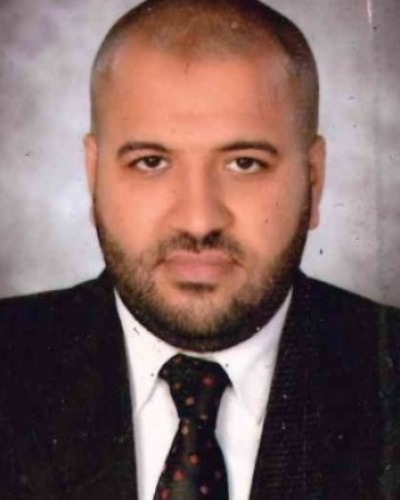
Dr. Amr Ahmed Mostafa is a prominent researcher and academic expert in the field of Materials Science and Nanotechnology, with a specialized focus on Heterogeneous Photocatalysis and Nanostructured Semiconductors. I holds a PhD in Materials Science, and his research is at the forefront of developing high-efficiency nanocomposites, particularly TiO₂-SnO2 and TiO₂-Cu₂O heterojunction systems, for advanced environmental applications and wastewater treatment.
I am a distinguished track record of publishing high-impact research in prestigious international journals, including Springer Nature and MDPI. His work is widely cited for its contributions to understanding charge carrier dynamics and the optimization of metal oxide catalysts. In addition to his academic achievements, I am a recognized International Invited Speaker and a peer reviewer for several top-tier scientific journals. He is frequently invited to share his expertise at major global congresses across Europe and Asia, where he consults on the integration of nanotechnology in sustainable industrial solutions.
© 2026 Mathews International LLC. All rights reserved.
