

Ryazan State Medical University, Russian Federation
Abstract:
The role of strength properties of dental materials in the modern technological practice of forming braces systems [1] based on, for example, Ni-Ti alloys is well known. A significant role was found in the development of surface roughness of these structures, which was created in hydrogen plasma and intense laser fluxes.
The paper [2] shows the possibilities of composite polymer materials with different percentages of carbon nanotubes with unique strength characteristics. In a large series of studies (see, for example, [3, 4]), the structure and conductive properties of carbon films have been studied using tunneling, infrared, X-ray, photoelectron, Auger spectroscopy, Raman spectroscopy, X-ray diffraction, and transmission electron microscopy. Such heterosystems have been synthesized on various metal substrates (Al, Mo, Re, Ta, Ag, Cu, and Pt) and the effect of the substrate material on the properties of the carbon film has been studied.
This report presents the results of the analysis of the carbon buffer layer in bracket systems by slow electron diffraction and Auger electron spectroscopy. The sections of the fracture surfaces were studied using atomic force microscopy (AFM). The results of a comparative analysis of existing structures and a proposed constructive biomaterial based on a carbon component are presented. Recommendations based on mechanical tests for the rupture of these systems are proposed..jpg)
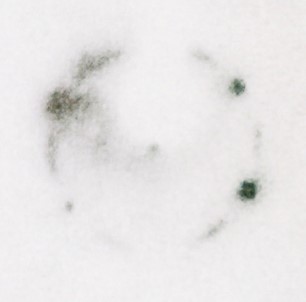
Auger electron spectra [5] for various states of carbon atoms on the surface: C on a Mo substrate (upper curve); CO on a Mo substrate (middle curve); graphite (lower curve). Diffraction pattern of the local zone of the buffer layer.
Biography:
To be updated shortly..
© 2026 Mathews International LLC. All rights reserved.
