
Abstract:
This research provides a full experimental validation of the flexural strength recovery of carbon fiber composites with a reversible disulfide covalent network, and provides quantitative performance metrics needed for aerospace structural applications. Carbon fiber/epoxy laminates were fabricated using 4-aminophenyl disulfide (6-10 wt%) as a dynamic cross linker in an amine cured epoxy matrix. The chain mobility was improved by adding PDMS (5 wt%). Controlled damage was applied to the specimens by three-point bending, resulting in micro crack densities of 0.5-2.0 cracks/mm². The activation temperature of healing was 100°C and the activation time was 4 hours with light contact pressure (0.1 MPa). The flexural strength recovery was evaluated by re-testing and healing efficiency (η) was calculated as the ratio between the flexural strength of the healed and original samples. Other characterizations performed were fracture surface analysis using SEM-EDS, dynamic mechanical thermal analysis (DMTA) for crosslink density calculation, and fatigue precracking and healing for damage tolerance restoration. The average flexural strength of undamaged composites was 685 MPa (±32 MPa). After controlled damage, strength decreased to 247 MPa (64% reduction). Specimens were recovered after thermal activation at 589 MPa, which equates to an 86% healing efficiency. The higher the disulfide content (8 wt%), the better the recovery, but the lower the initial modulus (12%). SEM analysis showed that the cracks closed and the matrix re-integrated, with remaining crack widths <2 µm. The fatigue test showed that the healed specimens had 73% of the fatigue life of virgin specimens at 60% of the ultimate load. There was progressive efficiency decay over multiple healing cycles (n=3; 86% → 79% → 68%), which was believed to be due to network reorganization and degradation of the fiber-matrix interface. The reversible crosslink density restoration after healing was confirmed by DMTA, and 91% of the peak characteristics of tan δ were recovered. The recovery of flexural strength demonstrated (86%) and the significant recovery of fatigue life gives programmatic confidence to move this technology to load-bearing satellite components. The trade space found between initial stiffness and healing ability can be used to guide material optimization for particular mission needs.
Biography:
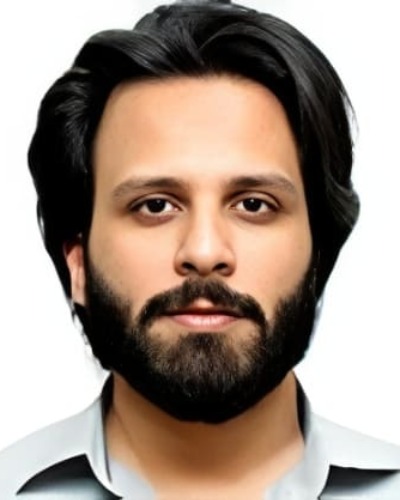
Waleed Aslam is a Manager (Technical) specializing in composite structures and space systems engineering. Based in Pakistan, he leverages 8+ years of experience in aerospace and defense to drive indigenous satellite manufacturing and advanced materials development. Previously, Waleed held roles, where he developed deep expertise in composite design, conducted governmental-level failure analysis based road crash investigations, and contributed to critical defense engineering programs. Waleed holds a Bachelor's in Materials Science and Engineering and a Master's in Mechanical Design from Institute of Space Technology, and is passionate about smart materials, self-healing composites, and next-generation spacecraft technology.
© 2026 Mathews International LLC. All rights reserved.
