Senior Researcher
Institute of Physical Chemistry – Ilie Murgulescu of Romanian Academy, Romania
Abstract:
Thermal conductivity enhancement in polymer nanocomposites reinforced with metal–ceramic core–shell nanoparticles depends on phonon transport within the constituent materials and across their interfaces. This report presents a spectral kinetic Monte Carlo (KMC) modelling framework for investigating heat transport in polymer matrices reinforced with copper-core/silica-shell (Cu@SiO?) nanoparticles. Phonons are represented as energy-carrying walkers undergoing propagation, intrinsic scattering, and probabilistic transmission or reflection at polymer–SiO? and SiO?–Cu interfaces. Interfacial transport is described using the Diffuse Mismatch Model (DMM), while Kapitza resistance characterizes thermal boundary effects. The effects of silica-shell thickness, nanoparticle volume fraction, and interfacial thermal resistance on effective thermal conductivity are examined using the parameters and results reported in the study. The reported conductivity increases from 0.50 W m?¹ K?¹ at a shell thickness of 2 nm to a maximum of 0.79 W m?¹ K?¹ at 10 nm, before decreasing for thicker shells. Increasing nanoparticle volume fraction from 0 to 30% raises conductivity from 0.18 to 0.63 W m?¹ K?¹, whereas increasing Kapitza resistance from 10?? to 10?? m² K W?¹ reduces it from 0.75 to 0.35 W m?¹ K?¹. These trends illustrate the competing effects of nanoparticle geometry, thermal bridging, and interfacial resistance. The results highlight the importance of optimizing shell thickness and interface quality to improve heat transport while retaining the protective and stabilizing functions of the silica shell..
Biography:
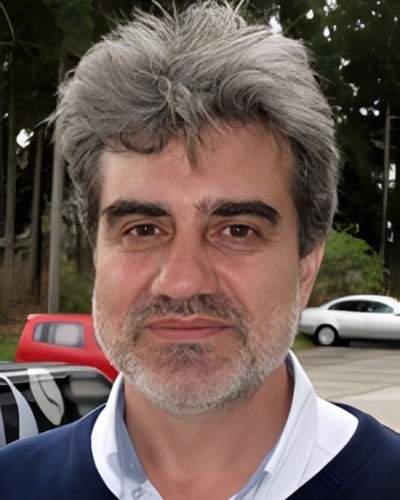
Dr. Viorel Chihaia is a senior researcher at the “Ilie Murgulescu” Institute of Physical Chemistry of the Romanian Academy in Bucharest, Romania. He graduated in Physics from the University of Bucharest in 1989 and obtained his PhD in Chemistry in 1999. His research focuses on surface science, catalysis, and energy materials, using computational chemistry, quantum chemical calculations, and molecular dynamics simulations. He has also collaborated with renowned international research institutions in Germany, South Korea, and Taiwan, contributing to advances in computational materials science.
© 2026 Mathews International LLC. All rights reserved.
