
Abstract:
In quantum mechanics (QM) the theory of quantum transitions works only in atomic physics and in the adiabatic approximation (AA) in molecular and chemical physics. To restore the functionality of QM in molecular and chemical physics beyond AA, Egorov is forced to introduce the so-called dozy chaos (DC) into QM. DC is introduced by replacing the infinitesimal imaginary additive in the energy denominator of the total Green’s function of the system with a finite value. As a result, the transition between quantum states taken in AA becomes continuous, and QM itself becomes quantum-classical mechanics (QCM). In the case of strong DC, QCM leads to the same results as QM. In the case of weak DC, a regular component in the transient state dynamics appears against the background of chaos. The coherent interaction of the regular component in the electron charge motion and the regular component in the reorganization motion of the nuclei in the environment leads to the so-called Egorov resonance (ER). The same chaos can be strong for small molecules (standard optical spectroscopy) and weak for large molecules (photochemistry and nanophotonics). Therefore, ER is also called nano-resonance. ER explains the nature of the well-known narrow and intense optical J-band of J-aggregates of polymethine dyes, discovered by Jelley and Scheibe in 1936. The first explanation of the nature of the J-band was given by Franck and Teller in 1938 based on the Frenkel exciton concept. This article discusses in detail the evolution of theoretical ideas about the nature of the J-band over almost a century of history and provides a deeply reasoned criticism of them. On the basis of QCM it is explained a large number of experimental data on the shape of optical bands in polymethine dyes and their aggregates. The nature of the physical source of life, possible alternative life forms and the idea of living materials are discussed [1].
Keywords: Planck quantum transitions; Egorov quantum-classical transitions; Egorov nano-resonance; shape of optical bands; optical J-band of J-aggregates.
Biography:
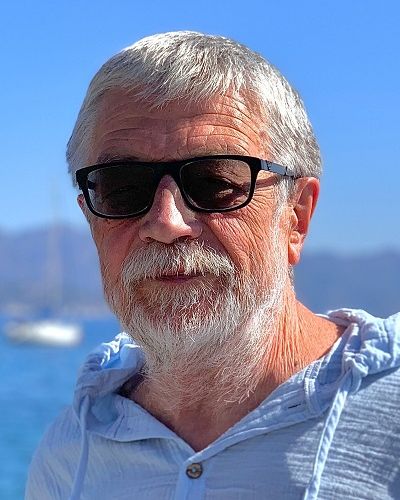
Prof Dr Vladimir Valentinovich Egorov has his expertise in theoretical molecular and chemical physics. Education: National Research Nuclear University MEPhI, Faculty of Theoretical and Experimental Physics (1966 – 1972), Moscow, USSR. He has completed his PhD from Theoretical Department of Institute of Chemical Physics, USSR Academy of Sciences (1981), and he has completed his Dr Phys&Math Sci degree from Institute of Physical Chemistry, Russian Academy of Sciences (2004). He is leading researcher at NRC “Kurchatov Institute”, Moscow, Russia. Prof Egorov is working on the development of a fundamentally new physical theory ‒ quantum-classical mechanics and their applications in physics, chemistry, biology and biomedicine.
© 2026 Mathews International LLC. All rights reserved.
