
Abstract:
This study established a robust multivariable correlation framework to investigate how the weight-average molecular weight (????"!) of poly(lactic-co-glycolic acid) (PLGA) and the nanoparticle (NP) preparation method dictate the interconnected physicochemical characteristics and release kinetics of curcumin (CUR)-loaded NPs. NPs were prepared using either emulsion solvent evaporation (ESE) or nanoprecipitation (NPM), employing PLGA with varying chain lengths. Principal component analysis (PCA) and bivariate scatterplot matrices successfully mapped the multivariable formulation space, accounting for 81.61% of the cumulative variance. CUR was efficiently encapsulated, yielding spherical architectures with a polydispersity index (PDI) < 0.26 across all formulations. Significant differences were observed between preparation methods; the absolute smallest hydrodynamic diameters (~130 nm) paired with the highest negative surface charges (~ -46 mV) were achieved within the surfactant-free platform (NPM:naked) due to unprotected terminal carboxyl groups. Conversely, the introduction of Pluronic F127 in NPM increased the Z-average through interfacial chain entanglement but optimized encapsulation efficiency (EE) above 94%. Within the surfactant-stabilized systems (ESE and NPM:F127), higher Mw matrices produced smaller particles due to elevated phase viscosity. In vitro mathematical modeling, rigorously discriminated via Akaike (AIC) and Bayesian (BIC) information criteria, revealed that CUR release profiles obtained from NPM exhibited non-monotonic behavior driven by consecutive kinetics. While classical empirical equations failed to fit the concentration decline caused by CUR instability, the Makoid-Banakar model successfully decoupled core mass transport from environmental autoxidative degradation. The intermediate ????"! polymer matrix (Resomer® 503H) achieved a well-regulated release constant (KMB = 12.1450 h-n) balanced with a degradation rate constant (c = 0.0185 h-1). Conversely, the largest polymer matrix (NPs 504H) triggered accelerated initial surface desorption (KMB = 6.4215 h-n), which possibly stems from macromolecular crowding that forces CUR segregation toward the periphery. Among all evaluated candidates, the Resomer® 503H prepared via NPM achieved the most favorable combination of properties, balancing robust colloidal properties (Z-average: 180.0±13.2 nm, ζ-potential: −35.7±4.1 mV, PDI: 0.14±0.04, and CUR EE: 94.78±5.8%) with a predictable diffusion-controlled release. This thermodynamic and biophysical harmony positions this system as a highly promising polymeric platform for targeted drug delivery applications.
Biography:
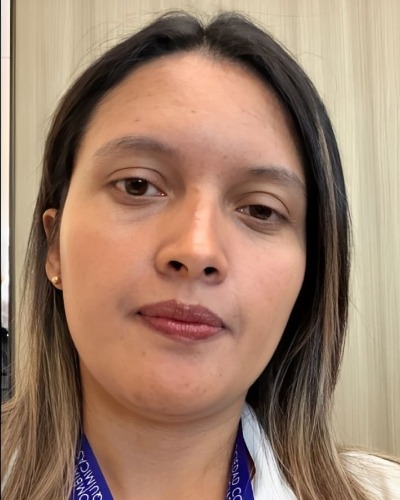
Dr. Jennifer Cruz is a Chemist specializing in the research and development of polymeric nanoparticles for biomedical applications. She holds a PhD in Chemical Sciences from the University of Antioquia. Dr. Cruz has collaborated extensively with the Universidad de la Amazonia on research initiatives involving chemometric multivariable analysis and the optimization of advanced nanocarrier systems, leading to multiple peer-reviewed publications. She is currently a fulltime Professor and Faculty Member in the Chemistry Program within the Faculty of Basic Sciences at the Universidad de la Amazonia.
© 2026 Mathews International LLC. All rights reserved.
