
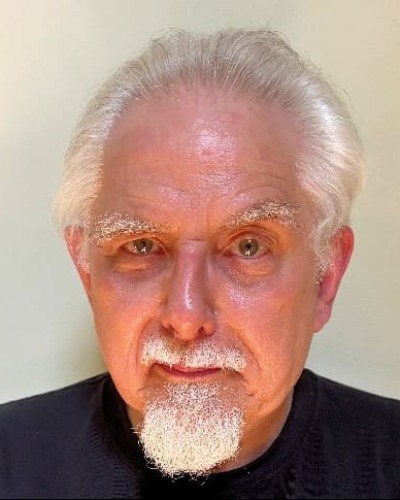
Michael Spry Consulting, United States
Abstract:
Discussion of thermoelectric (TE) material performance, has long been clouded by over-simplifications. Many are based on assumptions of no temperature dependency, exclusion of some properties from consideration, or reducing varying coefficients to singular effective values. In the early decades of scientific analysis for material properties, it was virtually impossible to mathematically integrate the Seebeck, Peltier, and Thomson Effects along with thermal conduction and electrical resistance. It was also an insurmountable challenge to resolve the co-dependencies of properties and thermal gradients. The emergence of widespread computer availability, however, finally offered the necessary capability for high volumes of serial calculations and automatic data manipulation. Legacy methods of analysis have nonetheless continued to predominate well into the 21st Century.
In forging new computer models to support the book Reframing Thermoelectric Effects For Better Understanding, finite element analysis was used to replace the effective levels commonly employed in the past. The intention was to detail the changing flow of energy throughout the length of operational samples. Toward that end, samples were conceptually divided into 1000 or 2000 segments along the axis of current flow. The desired ΔT was then divided among the segments. To establish a thermal gradient across the series, the length of each segment had to be determined. This was accomplished through deriving equations which summed up the interaction of material effects in each segment. This led to the derivation of quadratic formulas which could determine the length of each segment based on the cross-sectional area, junction temperatures, and the segmental energy levels for each of the properties.
It was also necessary to employ a computer algorithm called successive approximation (SA); this made it possible to estimate key variables within nested SA processing loops. The innermost loop, established an estimate for source heat, then calculated the lengths of segments and compared the total length with that specified for the sample. Based on the direction of error, a new estimate for source heat was determined by incrementing or decrementing the previous value. After 20 estimates of this heat with decreasing margins of change, the closest sum of the segment lengths would approximate the specified length. Other loops of SA algorithms, resolved specifications against calculated values for variables such as current level (for power generation) or peak gradient temperature (for cooling/heating). This led to convergence on a solution which determined the thermal gradient and balanced the varying energy levels from segment to segment. The changing energy levels along the length were then automatically displayed on an area graph; these included phenomena related to Seebeck, Peltier, and Thomson effects, along with Joule heat and thermal conduction. The computer models for TE power generation and cooling/heating, were ultimately able to successfully generate a thermal gradient and balance energy levels for every set of operating specifications attempted over hundreds of trials.
Thus, the innovative use of computer algorithms, has led to analysis of material performance with greater potential for accuracy than has been seen with legacy approaches, and which better reveals the actual nature of operation.
Biography:
Michael Spry is a retired electrical engineering technologist, computer programmer, and writer. He earned a BS in psychology from Michigan State University, and an AAS in electronics technology from Northwestern Michigan College. After stints in social work and electronics education, Spry spent 24 years as an EET and computer programmer at Tellurex Corpora-tion. There, he designed testing and temperature control systems, and also created computer programs for designing and modeling thermoelectric (TE) systems. He also served on teams designing and testing advanced TE devices. After retiring in 2011, Spry began writing books on TE fundamentals.
© 2026 Mathews International LLC. All rights reserved.
