
Abstract:
Thermal cycling in orbit is a major factor in the development of microcrack damage in satellite structures, which is a critical limiting factor in their operational lifetime. The development and characterization of a disulfide-modified epoxy-PDMS hybrid composite system solves a basic problem: how to repair autonomously without compromising the structural integrity or adding outgassing hazards. A novel matrix formulation was developed by adding 4-aminophenyl disulfide (AFD) to a diglycidyl ether of bisphenol A (DGEBA) epoxy system, modified with hydroxylterminated PDMS at different concentrations (5-15 wt%). APTES was used as a compatibilizer to improve the adhesion between the epoxy and PDMS. The carbon fiber reinforced laminates were produced using a vacuum-assisted resin transfer molding (VARTM) process and a [0/90]? layup. The thermal activation behavior was investigated by differential scanning calorimetry (DSC) and dynamic mechanical analysis (DMA) to determine the disulfide metathesis kinetics at different temperatures. The healing efficiency was evaluated by measuring the mode I fracture toughness recovery (G-IC) after controlled crack initiation and thermal treatment under vacuum conditions at 3 different temperatures (80°C, 100°C, and 120°C). Space compatibility was verified by outgassing tests (ECSSQ-ST-70-02C). The disulfide exchange onset was confirmed by DSC at 85°C and maximum metathesis activity at 105°C, which is well within the operational temperature range of typical satellite orbits. The storage modulus retention of DMA at 120°C was 92%, showing minimal thermal softening. The healing efficiency was optimized at 10 wt% PDMS and 8 wt% AFD, with 87% recovery of initial G-IC after 2-hour thermal activation at 100°C, and was found to decay progressively with multiple healing cycles (n=5) due to partial phase separation observed using SEM. Importantly, the total mass loss (TML) was 0.82% and the collected volatile condensable materials (CVCM) was 0.04%, which were both in full compliance with space material standards. This work successfully provides a material with programmatic path to autonomous damage repair in satellite structures with a goal of extending operational life.
Biography:
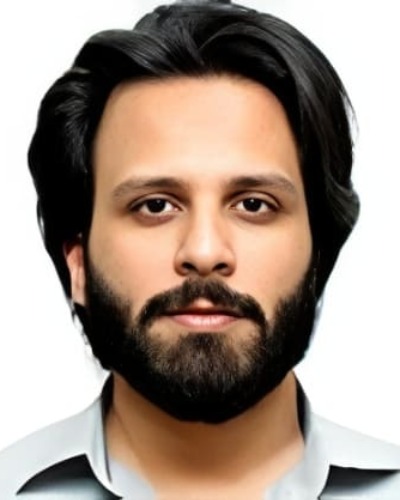
Waleed Aslam is a Manager (Technical) specializing in composite structures and space systems engineering. Based in Pakistan, he leverages 8+ years of experience in aerospace and defense to drive indigenous satellite manufacturing and advanced materials development. Previously, Waleed held roles, where he developed deep expertise in composite design, conducted governmental-level failure analysis based road crash investigations, and contributed to critical defense engineering programs. Waleed holds a Bachelor's in Materials Science and Engineering and a Master's in Mechanical Design from Institute of Space Technology, and is passionate about smart materials, self-healing composites, and next-generation spacecraft technology.
© 2026 Mathews International LLC. All rights reserved.
