
CIATEJ, Mexico
Abstract:
Composites based on polylactic acid (PLA) reinforced with lignocellulosic fibers from avocado (Persea americana) shell waste (ASW) and cacao (Theobroma cacao) shell waste (CSW) were prepared. The effect of chemical functionalization of the fibers on the mechanical, thermal, and morphological properties of the composites was analyzed. ASW and CSW are underutilized agro-industrial residues with a high lignocellulosic content. The fibers were extracted and subsequently functionalized via oxalic acid esterification to improve compatibility with the PLA matrix. Biocomposite plates with 6 wt% of treated fibers were obtained using a thermocompression molding process (Carver press) to produce 3 mm thick plates. Subsequently, standardized test specimens for tensile and flexural testing were laser-cut in accordance with ASTM D638 and D790. A comprehensive characterization protocol was employed to evaluate the effect of fiber treatment on the biocomposite performance. Scanning electron microscopy (SEM) was used to assess fiber dispersion, interfacial adhesion, and fracture morphology. Chemical interactions between the functionalized fibers and the PLA matrix were investigated by Fourier-transform infrared spectroscopy (FTIR). Thermal properties were analyzed by differential scanning calorimetry (DSC) to determine glass transition temperature, melting behavior, and crystallinity. At the same time, thermogravimetric analysis (TGA) was employed to evaluate thermal stability and degradation profiles. Mechanical performance was quantified using tensile, flexural, and interlaminar shear tests in accordance with ASTM standards. This methodological approach aims to establish correlations between chemical functionalization, microstructure, and thermomechanical properties. By using reinforcements of natural and residual origin (avocado and cacao shells) and developing biocompatible filaments for additive manufacturing, this approach promotes the reuse of agro-industrial waste, thereby reducing environmental impact and supporting the transition toward a circular economy.
Biography:
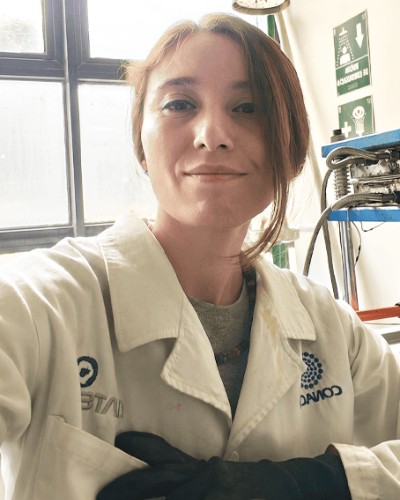
Julia Sarahi Soto Tovar is a Master's student in Biotechnological Innovation Sciences at CIATEJ, Mexico, researching PLA biocomposites reinforced with lignocellulosic fibers from avocado and cacao shell waste for thermoforming applications. She holds a degree in Fashion Design and has worked as a textile designer for international brands in China and Mexico, founded a sustainable fashion label, and lectured at university level. Her work bridges design, textile sustainability, and materials science to develop circular, bio-based manufacturing solutions.
© 2026 Mathews International LLC. All rights reserved.
