
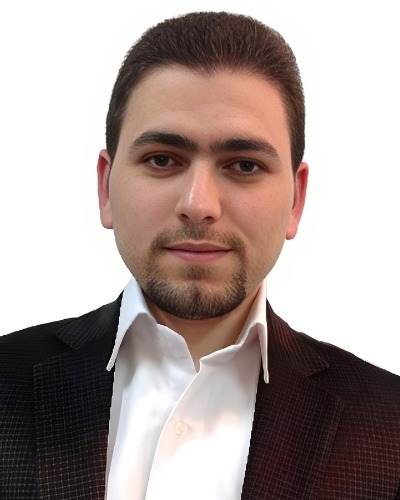
University of Tehran, Iran (Islamic Republic of)
Abstract:
The molten salt-assisted synthesis provides a new, efficient, and safe method for directly producing two-dimensional (2D) carbide MXenes, eliminating the need for traditional acid-etching techniques. Ternary copper-aluminum carbides (Cu2AlC) represent a new class of precursor MAX phases that are ideal for developing a new family of copper-based MXenes, such as Cu2C. I successfully synthesized Cu2CCl2 MXene 2D nanomaterials in an open-air environment using a method known as molten salt-shielded synthesis (MS3). This approach employs a Lewis acid salt (CuCl2) as an etchant and a low-melting-point eutectic salt mixture as the reaction medium. This combination effectively prevents the oxidation of the MXene structure at high temperatures. Both C2AlC and Cu2CCl2 MXene materials display bifunctional electrochemical performance for the oxygen evolution reaction (OER) and hydrogen evolution reaction (HER) through water-splitting processes. My findings suggest that Cu2CCl2 MXene holds great potential as a heterogeneous electrocatalyst for renewable oxygen and hydrogen production applications.
Biography:
Dr. Mojtaba Rostami was born in 1990 in Rasht, Iran. He received his B.Sc. in Applied Chemistry from PNU University, Rudsar, Gilan, Iran, in 2012. Then, he completed his M.Sc. in Nanoscience and Nanotechnology with a focus on Nanochemistry at the University of Kashan in 2014, under the supervision of Professor Masood Hamadanian. He received his Ph.D. in Nanoscience & Nanotechnology-Nanochemistry at the University of Tehran under the supervision of Prof. Alireza Badiei. His research topic is the architectural engineering of advanced nanomaterials based on MAX/MXenes and MOF derivatives for various cutting-edge applications. His current research interests focus on the design of MXene and MOF derivative nanomaterials for energy storage, production, and conversion applications. He has published 40 peer-reviewed research papers, of which 26 are the first/ 5 are corresponding-authored papers in prestigious journals. His publications have received more than 2500 citations (H-index of 31). From 2021 to 2025, He was recognized as one of the world's top 2% of scientists, according to data from Stanford University and Elsevier. Additionally, He received the distinguished Ph.D. thesis award from the University of Tehran in 2024.
© 2026 Mathews International LLC. All rights reserved.
