
Title : Concentration-and annealing-controlled plasmonic response of C60–silver nanocomposite structures
Abstract:
Hybrid carbon–metal nanostructures are attractive because they combine the strong electron-accepting character of fullerene C60 with the localized surface plasmon resonance and high conductivity of silver nanoparticles. In the present study, C60–Ag supramolecular systems were formed in C60/Ag/xylene/ethanol mixtures and transformed into thin nanocomposite films by low-temperature evaporation. The influence of silver concentration and post-deposition heating on the optical response, aggregation state, morphology, and interfacial electronic interaction was evaluated by UV–Vis spectroscopy, refractometry, densitometry, dynamic light scattering, scanning electron microscopy, and Raman spectroscopy. The refractive index and density of the multicomponent solutions varied non-monotonically, with the most pronounced anomalies near 0.08 and 0.12 mg mL-1 Ag, evidencing composition-dependent restructuring of fullerene–silver clusters. Colloidal Ag nanoparticles displayed an LSPR maximum at approximately 425 nm. Their incorporation into the C60 solution intensified the visible absorption and slightly displaced the fullerene bands toward longer wavelengths. Notably, the sample containing 0.08 mg mL-1 Ag exhibited a stronger optical response than the 0.12 mg mL-1 sample. DLS analysis related this effect to larger and less compact aggregates that retained the dipolar plasmon mode more efficiently, whereas denser clusters promoted plasmon damping. The deposited film consisted of elongated C60 nanowhiskers decorated with Ag-rich nanoclusters. Its plasmon band appeared near 480 nm and shifted to about 492 nm after annealing at 60 °C, together with a marked increase in absorbance. The downshift and broadening of the C60 Ag(2) Raman mode further indicated electron transfer from Ag to C60. These findings show that metal loading and mild annealing are practical parameters for engineering the plasmonic and electronic behavior of C60–Ag nanocomposites.
Biography:
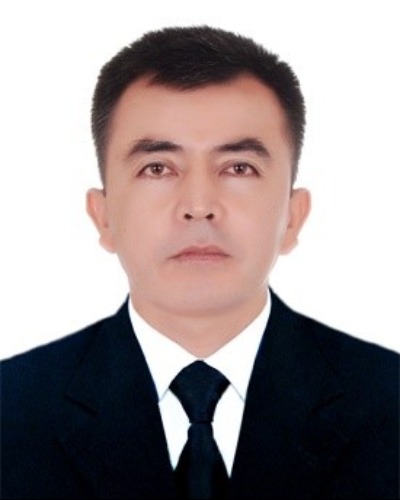
Urol Makhmanov is a professor and Head of a Scientific Laboratory at the Institute of Ion-Plasma and Laser Technologies of the Uzbekistan Academy of Sciences. His research interests include fullerene nanostructures, carbon–metal hybrid materials, optical spectroscopy, molecular self-assembly, and plasmonic nanocomposites. He has led and participated in national and international research projects devoted to the synthesis, structural characterization, and functional application of fullerene-based materials. His recent work focuses on controlling aggregation, charge transfer, and optical responses in multicomponent solutions and thin-film nanostructures.
© 2026 Mathews International LLC. All rights reserved.
