
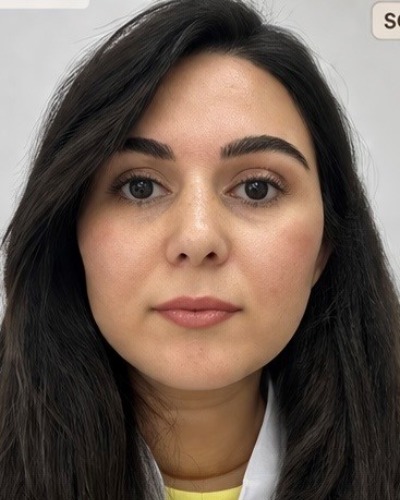
Doctoral Researcher
French Azerbaijani University (UFAZ) Under Azerbaijan State Oil and Industry University, Azerbaijan
Abstract:
Carbon nanotube (CNT)/polymer nanocomposites have attracted considerable interest due to their unique electrical, thermal, and mechanical properties. The incorporation of CNTs into insulating polymer matrices enables the formation of conductive pathways, resulting in significant changes in electrical behavior. The electrical properties of these materials depend strongly on nanotube concentration, dispersion quality, interfacial interactions, and conductive network formation. Understanding charge transport mechanisms and percolation behavior in CNT/polymer systems is essential for explaining conductivity enhancement in nanocomposite materials. In particular, comparative studies involving synthetic and biopolymer matrices remain limited despite their importance for understanding the influence of polymer structure on electrical transport.
In this work, epoxy-based and chitosan-based CNT/polymer nanocomposites containing different concentrations of multi-walled carbon nanotubes (MWCNTs) were prepared and investigated. Epoxy resin and chitosan were used as polymer matrices. Epoxy/CNT nanocomposites were prepared by direct mechanical mixing of CNTs with liquid epoxy resin, while chitosan/CNT nanocomposites were obtained by dispersing CNTs in a Tween-20 solution followed by incorporation into a chitosan solution prepared in acetic acid. The resulting samples were dried at 30 °C to obtain solid nanocomposite films. The electrical behavior of the prepared nanocomposites was investigated through current–voltage (I–V) measurements and AC electrical characterization. In addition to the I–V characteristics, AC electrical measurements were performed to investigate frequency-dependent charge transport processes. The results showed that the electrical response of the nanocomposites depended on both CNT concentration and applied frequency. The AC conductivity increased with increasing frequency, indicating the contribution of hopping and tunneling mechanisms to charge transport. Samples containing higher CNT concentrations exhibited a more stable electrical response, indicating the formation of continuous conductive pathways within the polymer matrix.
The obtained I–V characteristics demonstrated a significant increase in current with increasing CNT concentration in both polymer systems. The slope of the I–V curves increased progressively with nanotube loading, indicating improved charge transport and conductive network formation within the polymer matrix. Since all investigated CNT concentrations were in the range of 0,3–4 wt.%, the nanocomposites are expected to be above the percolation threshold. The observed electrical behavior therefore reflects the development and stabilization of conductive CNT networks within the polymer matrix. According to percolation theory, the formation of interconnected CNT pathways enables efficient charge transport through the insulating polymer matrix. The observed enhancement in electrical response can be explained by the formation of interconnected CNT networks and electron tunneling between neighboring nanotubes. Comparative analysis revealed that chitosan/CNT nanocomposites exhibited higher electrical response than epoxy/CNT systems at identical CNT concentrations. This behavior is attributed to improved nanotube dispersion and stronger interfacial interactions in the chitosan matrix, leading to more efficient conductive pathways.
The results provide insight into the relationship between polymer matrix characteristics, conductive network formation, and charge transport mechanisms in CNT/polymer nanocomposites. The findings contribute to a better understanding of percolation phenomena and electrical transport processes in carbon nanotube-based nanocomposite materials.
Biography:
I am a doctoral researcher at the Institute of Physics of the Ministry of Science and Education of the Republic of Azerbaijan and a lecturer at the French-Azerbaijani University (UFAZ) under Azerbaijan State Oil and Industry University. My research focuses on nanomaterials, polymer nanocomposites, and condensed matter physics. My doctoral research is dedicated to investigating the electrical conductivity mechanisms of carbon nanotube/polymer nanocomposites, with particular emphasis on percolation behavior, charge transport processes, conductive network formation, and the influence of nanofiller dispersion on the electrical properties of composite materials.
© 2026 Mathews International LLC. All rights reserved.
